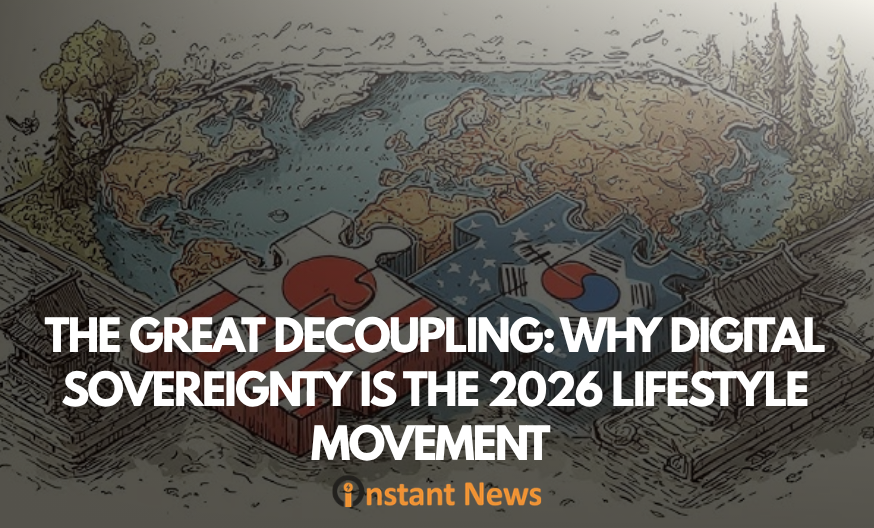
For years, we lived in an era of “Digital Surrender.” We traded our privacy for convenience, letting a handful of platforms own our data, our photos, and even our habits. But as we cross into the second quarter of 2026, the tide has officially turned. The most significant trend in technology isn’t a new gadget or a faster chip—it is the explosive rise of Digital Sovereignty.
In April 2026, the “Year of Truth for AI” has arrived, and with it, a demand for independence. From the Trump Administration’s new National AI Legislative Framework to the global adoption of “Sovereign Clouds,” the message is clear: the data belongs to the person who created it. Digital Sovereignty is no longer a niche topic for tech activists; it is a mainstream lifestyle choice for millions of Americans who are “decoupling” from the big tech monoculture.
The Legislative Spark: Protecting the American Digital Sovereignty
The primary driver of the Digital Sovereignty conversation this month is the massive federal push for AI regulation. The White House recently unveiled a framework aimed at “Enabling Innovation and Ensuring AI Dominance” while strictly protecting intellectual property and free speech. This has sparked a national debate on how we can enjoy the benefits of AI without sacrificing our Digital Sovereignty.
For the first time, we are seeing bipartisan support for “Age Assurance” and “Privacy Protective” requirements that give parents real power over their children’s digital footprint. In 2026, Digital Sovereignty means that your family’s data isn’t just a commodity to be traded—it’s a protected asset.
Cloud 3.0: Moving Your Life Off the Public Grid
Technologically, Digital Sovereignty is being powered by the shift to “Cloud 3.0.” We’ve moved past the “all-in-one” public clouds of the 2010s. Today, businesses and individuals are moving toward “Sovereign Clouds”—private, hybrid systems that offer the power of hyperscale AI without the data-sharing risks.
By running local versions of models like Llama 4 or Gemini Nano on personal hardware, users are achieving a level of Digital Sovereignty that was impossible just two years ago. Your smart home, your medical records, and your private messages no longer need to “ping” a central server in Silicon Valley. In 2026, the most high-tech homes are the ones that are the most “offline” from the public grid.
The Right to Disconnect and the “Ima-katsu” Mindset
Interestingly, the push for Digital Sovereignty has a very human side. We are seeing a surge in the “Right to Disconnect” legal reforms. Allowing workers to reclaim their time from 24/7 digital pings. This pairs perfectly with the trending “Ima-katsu” (Living in the Moment) mindset, where people prioritize immediate well-being over long-term digital “metrics.”
Choosing Digital Sovereignty means choosing when and how you interact with technology. It’s about setting boundaries so that your phone serves you, rather than you serving the algorithm. In 2026, “Offline is the new luxury,” and the people who have mastered their Digital Sovereignty are the ones reporting the highest levels of mental clarity and productivity.
The Creator Economy and Intellectual Property Rights
For creators, Digital Sovereignty is a battle for survival. With AI models trained on trillions of images and words. The 2026 legislative framework is finally giving “Digital Rights Management” some real teeth. Artists and writers are using blockchain-backed “Integrity Tags”. To track their work across the web, ensuring they are compensated for every use.
This “Verified by Human” movement is the ultimate expression of Digital Sovereignty. It allows creators to opt-out of massive training sets and maintain control over their “Digital Twin.” In a world of infinite AI deepfakes, your Digital Sovereignty—your unique, verified human identity—is your most valuable currency.
Conclusion: Reclaiming Your Digital Future
As we look at the search trends for the rest of 2026, it’s clear that the era of “Passive Consumption” is over. We are entering the era of the “Active Owner.” Digital Sovereignty is the framework that will define the next decade of our lives.
Whether it’s through supporting federal privacy laws, moving to private cloud systems. Or simply setting better boundaries with your devices. Reclaiming your Digital Sovereignty is the smartest move you can make this year. The internet of 2026 is faster and smarter than ever. But it’s only “better” if you’re the one in the driver’s seat. It’s time to stop being a user and start being a sovereign.