
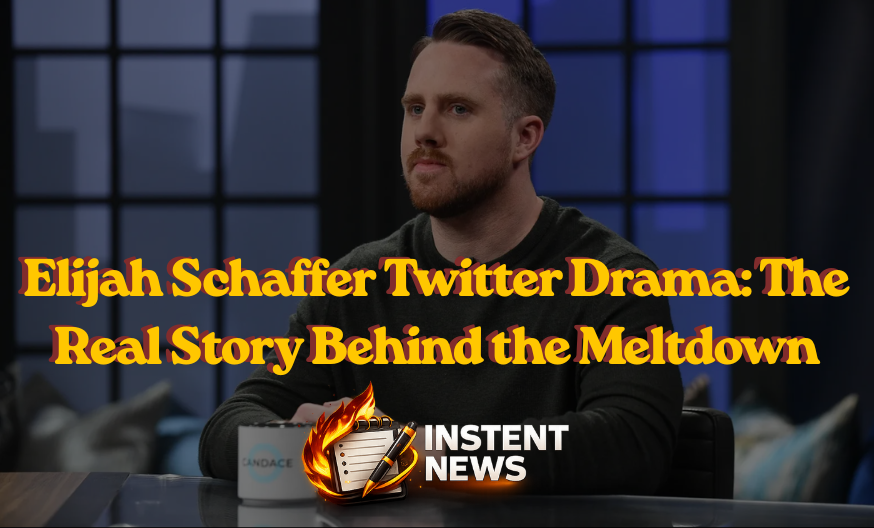
The internet thrives on drama, but some stories take a dark, unexpected turn. Recently, the Elijah Schaffer Twitter account became the center of a massive social media storm. The conservative influencer threw his platform into absolute chaos. He posted a series of frantic, alarming claims that left his followers completely stunned.
Schaffer claimed his family had suddenly gone missing. He alleged that anonymous actors had planted drugs in his home. He even aimed his sights directly at the FBI, claiming they were actively trying to destroy him. Within hours, these frantic posts vanished from his profile. But on X, nothing is ever truly deleted.
Screenshots immediately went viral. Commentators began speculating wildly about what was happening behind the scenes. Was it a genuine security threat, a breakdown, or something else entirely? The sudden meltdown left everyone asking a single question: what is really going on with the head of RiftTV?
Unpacking the Reality Behind the Viral Meltdown
The wild speculation did not last long. Public records and online sleuths quickly uncovered the truth behind the dramatic claims. Schaffer eventually posted a clarification, admitting that his wife had divorced him and left with their children.
“I’m sober. I’m sad. I have good support,” he shared in a later post.
However, the drama ran much deeper than a simple marital split. Court records revealed that Schaffer himself had filed for divorce in Palm Beach County, Florida. Fellow conservative commentators soon stepped forward to expose the details. Far-right figure Milo Yiannopoulos publicly alleged that Schaffer had been involved in a long-term affair with another conservative influencer, Sarah Stock.
The frantic posts about FBI plots and missing family members appeared to be a chaotic reaction to a personal life imploding under the public gaze. For an influencer who built his brand on traditional family values and fatherhood, the sudden exposure created a massive wave of backlash.
The Legal Battles and Multi-Million Dollar Lawsuits
The relationship drama is only one piece of the puzzle. The Elijah Schaffer Twitter account has also been a massive liability for the creator due to intense legal warfare. Recently, Schaffer found himself targeted by a massive $5 million defamation lawsuit.
The lawsuit was filed by Alexis Wilkins, a country musician and the partner of FBI Director Kash Patel. Schaffer had used his platform to spread conspiracy theories about Wilkins. He claimed she was a foreign intelligence agent working to compromise Patel. Wilkins hit back hard, accusing Schaffer of using fabricated narratives as “self-enriching clickbait.”
Schaffer publicly dismissed the legal action on X, calling it delusional. He even publicly pleaded with Elon Musk to cover his mounting legal fees under Musk’s free speech defense promise. Despite his public bravado, the lawsuit highlights the real-world financial dangers of chasing viral engagement through unverified allegations.
Turning Against the MAGA Base: A New Political Shift
In another shocking twist on RiftTV and social media, Schaffer recently stunned his audience by completely turning on his political base. During a broadcast, Schaffer admitted he regretted telling his followers to support Donald Trump.
- The Regret: He openly stated that pushing his audience to vote for Trump was the incorrect position.
- The Motivation: He confessed his vote was transactional. He was trying to get a January 6th defendant employee out of prison and wanted a wiretapping investigation against himself dropped.
- The Shift: He expressed deep frustration with the administration’s handling of core issues like foreign policy and immigration.
This sudden pivot alienated a large portion of his remaining core audience. By stepping away from strict MAGA loyalty, Schaffer has found himself increasingly isolated in the independent media landscape.
What the Rise and Fall of Elijah Schaffer Tells Us About Clout Culture
The ongoing drama surrounding Elijah Schaffer is a prime example of the dark side of modern internet culture. In a media ecosystem fueled entirely by outrage, creators face constant pressure to stay relevant. They must continuously escalate their content to feed the algorithms.
This environment creates a dangerous dynamic. Creators trap themselves in a loop of status-chasing, vanity, and fake outrage. When public figures weaponize their personal lives and unverified conspiracies for views, the real-world consequences eventually catch up.
Schaffer’s journey shows how quickly digital influence can turn toxic. The very platform that built his career has become the stage for his public unraveling. As legal battles mount and his core audience fractures, the era of unchecked clout-chasing is facing a severe reality check.